
Views: 0 Author: Site Editor Publish Time: 2026-04-22 Origin: Site
Engineers and procurement teams frequently face a critical manufacturing question. They know SLA is highly touted for surface quality. But can it genuinely rival injection molding or resin casting? The industry demands end-use production parts and functional prototypes. Aesthetics often dictate project success.
The reality requires careful examination. 3D Printing inherently produces the smoothest raw output among additive technologies. However, achieving true optical clarity or glass-like smoothness is rarely automatic. It requires specific material selection. You must apply targeted Design for Manufacturing (DFM) principles. You also need a structured post-processing workflow.
This guide establishes an evidence-based framework. We evaluate SLA surface capabilities thoroughly. We highlight the necessary trade-offs. You will understand how dimensional tolerances impact aesthetic finishes. We also examine how these choices affect your broader production strategy. You will learn to navigate these engineering compromises successfully.
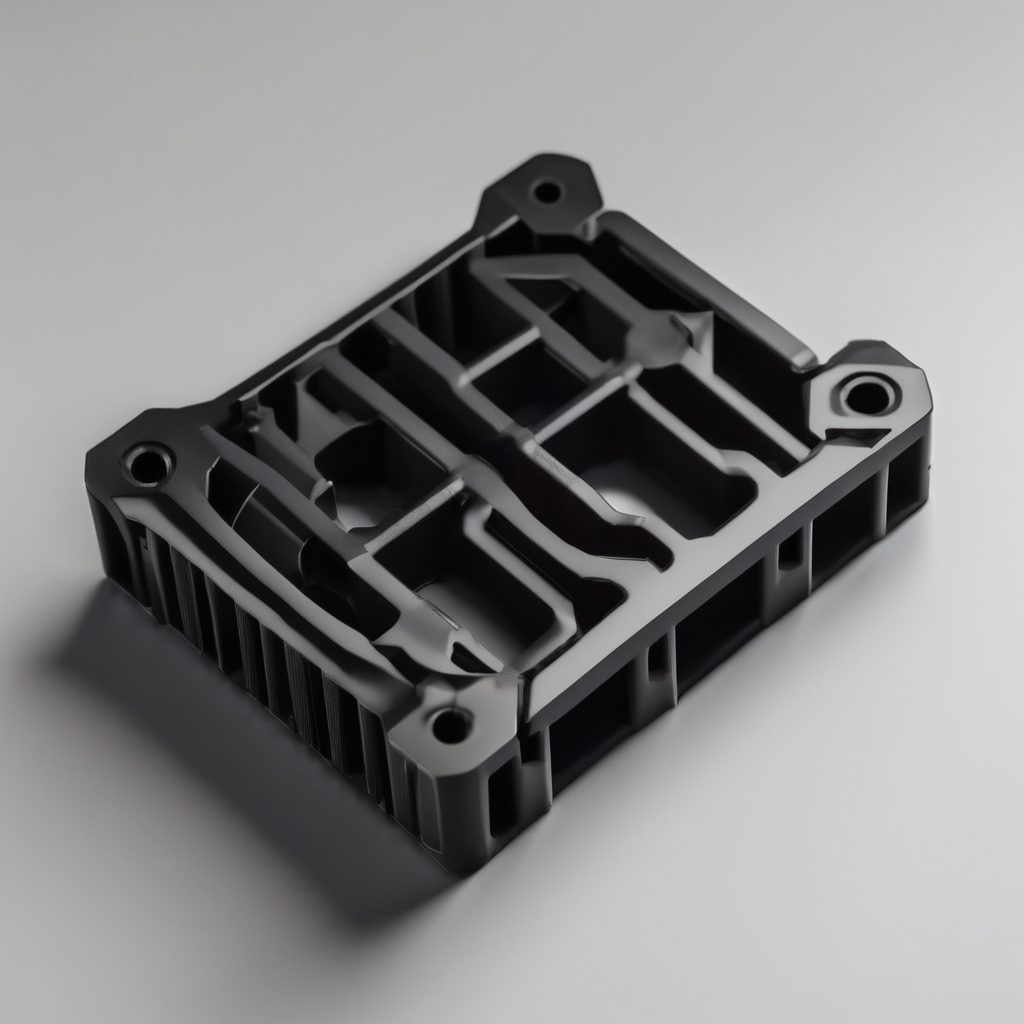
Baseline Superiority: As-printed SLA outperforms FDM and SLS in smoothness, but retains microscopic layer lines that scatter light and appear as a frosted or semi-translucent haze.
The Tolerance Trade-off: Aggressive manual sanding achieves mirror finishes but degrades geometric accuracy; media blasting offers a repeatable matte finish while preserving tight tolerances.
Material Matters: True glass-like smoothness depends heavily on the base resin's optical purity (e.g., standard clear vs. optical-grade clear).
Design Limitations: Poor DFM (like solid walls >10mm) leads to localized surface roughness (rashing) regardless of post-processing efforts.
Engineers often rely on Roughness Average (Ra) to evaluate surface quality. This single metric proves insufficient for resin manufacturing. Ra only measures arithmetic average deviations. It ignores texture patterns. Two surfaces can share identical Ra values. However, they might feel entirely different. Consider un-processed SLS parts. They feel like a sugar cube. They are porous and granular. In contrast, un-processed SLA feels close to molded plastic. Yet, it features distinct micro-stepping from layer lines.
You must understand the physics of 3D Printing SLA (Stereolithography). UV laser curing creates microscopic surface variations. The laser draws each layer precisely. The resin cross-links and hardens. This continuous stepping creates micro-porosity on vertical and angled walls. The surface is not perfectly continuous.
These micro-defects create noticeable optical consequences. The tiny layer lines cause light scattering. They prevent light from passing straight through the polymer. This results in an "as-printed" state. It looks cloudy or frosted. It rarely looks truly clear. This haze becomes especially obvious on sections thicker than 0.25 inches. Light refracts multiple times inside thick walls. It compounds the frosted effect.
Many technicians attempt to fix this using software. They enable "Anti-Aliasing" in their print settings. This feature blends macro layer lines digitally. It modifies edge pixels to create smoother transitions. While it reduces visible stair-stepping, a pitfall exists. It often yields a noticeably "soft" texture. The surface becomes uniformly frosted. This actually impedes high-gloss applications. You cannot polish a digitally blurred edge easily. Anti-aliasing complicates true optical clarity.
Common Mistake: Relying solely on anti-aliasing to achieve a clear part. It creates a matte haze. You must still perform mechanical post-processing.
We classify SLA surface finishes into three distinct tiers. This framework helps you match the finish to your engineering application. It standardizes expectations.
Finish Tier | Process Summary | Ideal Application | Relative Cost |
|---|---|---|---|
Tier 1: Natural | IPA wash, UV post-cure, light sanding on supports. | Form-and-fit testing, internal components. | Low |
Tier 2: Satin | Light sanding, media bead blasting (5-10 mins). | End-use consumer parts, premium tactile feel. | Medium |
Tier 3: Optically Clear | Progressive wet sanding (12k grit), varnish or oil. | Lenses, light guides, fluidic visualization. | High |
This tier represents the baseline. The process begins with a standard isopropyl alcohol (IPA) wash. It concludes with a UV post-cure cycle. Technicians remove the support structures. They lightly sand the contact points flat. The rest of the surface remains untouched. You will see layer lines.
This finish is best for form-and-fit testing. It suits internal components perfectly. Aesthetics remain secondary here. You achieve high production speeds. You also secure the lowest possible processing cost.
This represents the industrial standard for aesthetic parts. The process involves light manual sanding first. Next, technicians apply glass or plastic bead blasting. This takes about 5 to 10 minutes. The beads peen the surface gently.
This finish is best for end-use consumer parts. It provides a uniform, non-reflective appearance. It offers a premium tactile finish. The satin texture obscures internal geometries effectively. It hides minor printing artifacts.
This tier demands intense labor. The process requires progressive wet sanding. Technicians start at 400 grit. They work up to 12,000 grit systematically. Finally, they apply mineral oil or a high-gloss clear varnish. This seals the micro-scratches completely.
This finish is best for critical optical components. It serves lenses and light guides well. Fluidic visualization models require this tier. It demands the highest labor effort. It also extends the lead time significantly.
You cannot achieve a perfect mirror finish without consequence. A hidden trade-off exists between aesthetic smoothness and geometric precision. You must navigate this carefully.
Consider the sanding risk. Chasing a perfectly smooth surface requires aggressive manual sanding. You inherently remove native material during this process. A technician might sand away 0.1mm to 0.2mm of resin. This risks destroying sharp corners. It obliterates micro-channels easily. You will lose strict dimensional tolerances. A beautiful part might fail functional assembly.
We recommend the bead blasting advantage for general use. It positions media blasting as the most balanced choice. It masks layer lines effectively. Crucially, it does not alter critical dimensions. The process simply compresses the outer polymer skin. It can mechanically enhance parts too. Bead blasting consolidates the surface. It increases elongation properties slightly. It boosts impact strength.
Best Practice: Use alternative surface fillers instead of aggressive abrasion. Clear-coating sprays act as excellent fillers. Liquid polymers settle into micro-grooves. They level the surface chemically. This recovers optical transparency instantly. You achieve smoothness without subtracting native material. It protects your dimensional tolerances perfectly.
Standard finishes handle most basic applications. However, specific engineering requirements demand advanced surface treatments. You can modify SLA polymers extensively.
You must understand the difference between internal and external coloring. Dyeing transparent resins uses alcohol inks mixed into the raw vat. It creates uniform internal coloring. However, density effects occur. Thicker walls absorb more light. They appear visibly darker than thin walls. Uniform surface painting solves this. Acrylic or spray paints coat the exterior. They provide consistent color regardless of wall thickness. They do obscure the underlying material texture.
Ceramic Coatings: These deliver an ultra-smooth finish. They offer high-endurance wear resistance. They provide extreme chemical and temperature resistance. They suit harsh engineering environments perfectly.
Electroplating: This process achieves a smooth, metallic surface finish on polymers. It offers strong UV protection. It provides excellent corrosion resistance. It adds electrical conductivity. It accomplishes this at a fraction of direct metal printing costs.
Expert Implementation Tip: Use the "dip and cure" technique for clear parts. Follow these exact steps:
Sand the transparent part lightly to remove major support marks.
Clean the part thoroughly with IPA to remove all dust.
Dip the entire sanded part into its native liquid resin vat.
Let excess resin drip off for a uniform thin coat.
Re-cure the part under a UV lamp immediately.
This technique quickly achieves a glass-like shell. It bypasses extensive manual buffing. It fills all micro-scratches with identical base polymer.
Post-processing cannot fix bad design. You must apply strict DFM rules before exporting your file. Poor design leads to permanent localized surface roughness.
Managing wall thickness remains crucial. Warn your engineering team against designing thick, solid blocks. Avoid solid sections greater than 5 to 10 millimeters. SLA machines operate in an inverted orientation. The build plate pulls away from the resin vat continuously. This generates immense peel forces. Thick cross-sections resist this peeling aggressively. They cause "rashing" or ragging on external faces. The surface tears at a micro-level. Hollow your models and include drain holes.
Support orientation strategy dictates surface quality. Emphasize orienting critical cosmetic faces away from the build plate. Face them upward in the software. This ensures they require zero support structures. Supports leave physical divots. Removing them requires sanding. Upward-facing surfaces emerge perfectly smooth. This minimizes necessary post-processing significantly.
Common Mistake: Relying on printed threads. SLA-printed threads possess poor surface integrity. They shear under torque. They wear out quickly after a few fastening cycles. We recommend using brass threaded heat-set inserts. You can also design hexagonal pockets for captured nuts. These provide clean, strong mechanical assemblies. They maintain the smooth aesthetic of the surrounding polymer.
Evaluating technologies requires strict parameters. You must match the manufacturing method to your aesthetic goals. Use this criteria to guide your procurement decisions.
You have strict tolerance requirements. You need parts to fit together perfectly.
You require translucent or transparent features. Light transmission matters to your project.
You possess complex internal geometries. You need high-resolution flow visibility for fluid testing.
You need an injection-molded look without tooling costs.
Pivot to SLS: Do this if you require extreme mechanical durability. Choose it for high heat deflection applications. You must accept a naturally porous or matte finish. It will never look like clear glass.
Pivot to PolyJet: Choose this if you need multi-material outputs. It works best when you need multi-color and smooth surfaces simultaneously. However, you must accept lower mechanical strength. You will also face a higher part cost.
You can achieve remarkable aesthetics with resin technologies. SLA can absolutely produce injection-molding-level smooth parts. Buyers must simply budget for the correct tier of post-processing. They must also enforce strict DFM principles.
Raw SLA provides a baseline smoothness superior to powder or extrusion methods.
Media blasting offers the best balance between aesthetics and dimensional accuracy.
True glass clarity requires optical-grade resins and extensive wet-sanding or clear-coating.
DFM rules, particularly wall hollowing and support orientation, prevent irreversible surface defects.
Always weigh the sanding risk against your required geometric tolerances.
We encourage you to validate your specific use case. Request a physical sample plaque from your manufacturing partner. Ask them to show the different finish tiers on a single geometry. Alternatively, upload your CAD file for an automated DFM orientation analysis. This ensures your design supports a flawless finish.
A: No. Vapor smoothing (using acetone or similar solvents) is highly effective for specific FDM thermoplastics (like ABS) but does not melt/smooth the thermosetting cross-linked polymers used in SLA.
A: Yes, but it requires specific optical-grade resins, completely solid part design (no internal cavities/infill), progressive high-grit polishing, and a UV-resistant clear coat to prevent yellowing.
A: Yes. Leaving parts submerged in IPA or washing fluids for too long can cause surface swelling, tackiness, or micro-cracking, permanently damaging the smooth finish.


