
Views: 0 Author: Site Editor Publish Time: 2026-04-26 Origin: Site
High-precision manufacturing is not just an optional feature. It operates as a critical risk-management requirement for demanding sectors like aerospace, medical devices, and advanced robotics. In these strict industries, even a microscopic deviation can lead to catastrophic mechanical failures or severe regulatory penalties. You simply cannot afford unpredictable outcomes when human lives or million-dollar systems are on the line.
Traditionally, achieving tight tolerances relied heavily on constant manual intervention and extensive operational rework. This outdated approach creates severe scaling bottlenecks across the production floor. It leads to unpredictable lead times and rapid margin erosion. You cannot build a reliable, scalable supply chain when final quality depends entirely on manual tweaking by individual operators.
Ensuring extreme precision, often pushing down to the 1–5 micron range, demands a complete system-level ecosystem. You will learn how integrating machine rigidity, strict thermal management, advanced metrology, and tight operational controls achieves true dimensional accuracy. We will explore why relying solely on a high-end machine tool is no longer sufficient to guarantee compliance-grade perfection.
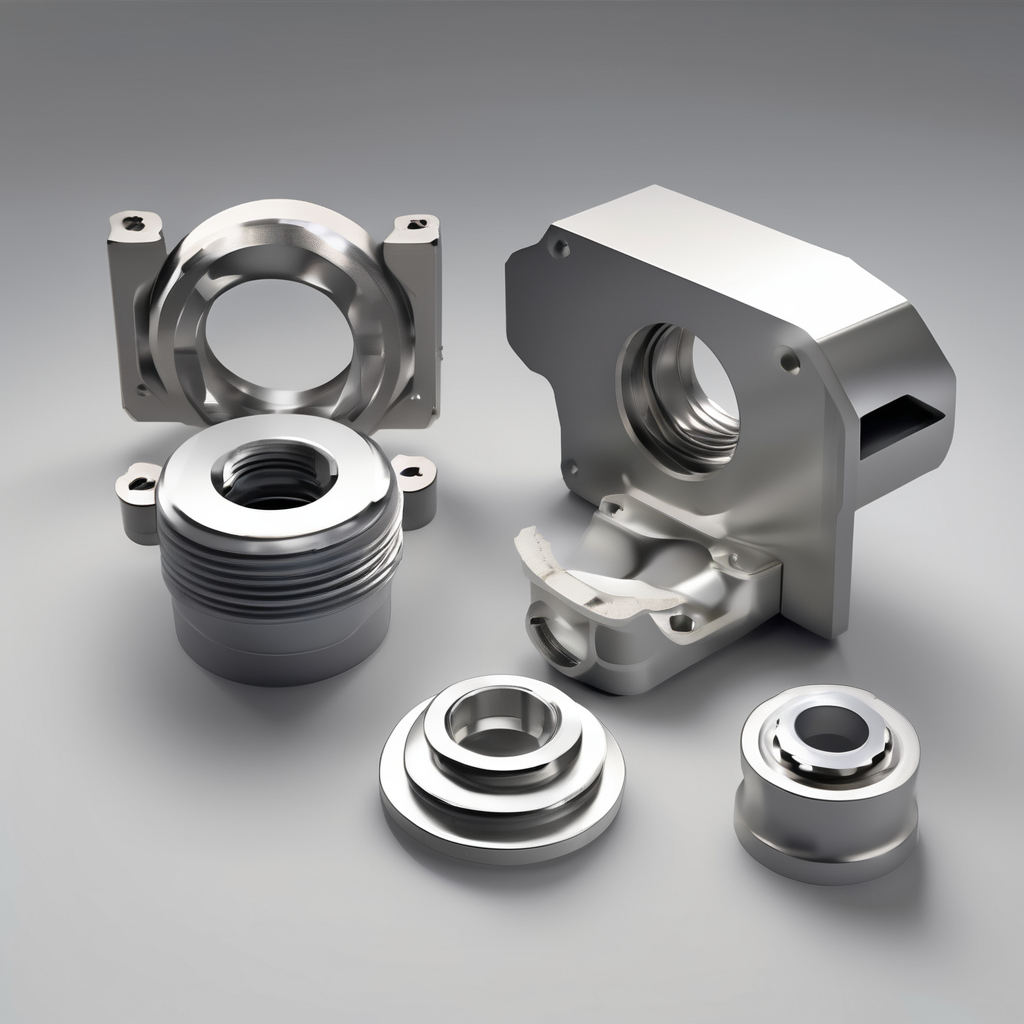
Precision is Systemic: True dimensional accuracy relies on the "system stiffness" chain—from the cutting tool to the machine bed.
Thermal Control is Non-Negotiable: Environmental factors, including thermal drift and even an inspector’s body heat, dictate tight-tolerance success.
Validation Drives Repeatability: Relying on statistical frameworks like Measurement System Analysis (MSA) and Gauge R&R ensures errors are caught before they compound.
Software and Hardware Must Align: Digital twins, CAM look-ahead capabilities, and in-machine probing prevent deviations before the first chip is cut.
People outside the manufacturing sector often use precision and accuracy interchangeably. However, modern engineering disciplines demand a very clear distinction between the two concepts. Precision refers strictly to process repeatability. It means your cutting tool hits the exact same relative spot consistently across hundreds of production cycles. Accuracy, on the other hand, means hitting the exact target dimension specified in the original CAD file. Compliance-grade manufacturing requires both elements simultaneously. You need the process to hit the exact bullseye, and you need it to do so every single time without drifting.
We must set realistic expectations for current capability benchmarks. Standard tolerances for CNC machined parts typically hover around ±0.005 inches, or roughly 0.13mm. This works perfectly well for commercial enclosures or basic brackets. Meanwhile, ultra-precision hardware tailored for aerospace fuel systems or medical implants routinely holds strict tolerances between 1 to 5 microns.
Achieving this dual baseline transforms your broader business outcomes. High precision drastically reduces the need for 100% manual inspection protocols. It shifts your quality control methodology from reactive checking to a predictable, highly visible data model. This fundamental shift radically shortens product turnaround times. It also prevents downstream assembly failures, ultimately protecting your company’s profit margins.
Your ultimate tolerance capability is fundamentally limited by the weakest link in your physical setup. This workpiece-fixture-tool-machine chain defines your overall system stiffness. Any localized loss of rigidity introduces unwanted vibration and chatter during the cutting cycle. This vibration destroys surface finishes and instantly ruins micro-level tolerances.
Workholding setup requires incredibly careful constraint design. You face serious operational dangers if you over-constrain or under-constrain metal parts. We highly recommend applying precise kinematic coupling principles in your fixture designs. Systems using Maxwell coupling models or Kelvin coupling systems ensure repeatable, distortion-free fixturing. They secure the part using defined contact points without inducing internal bending stress.
Minimizing setup errors is equally critical in modern CNC machining environments. You must reduce manual part-handling drastically. Utilizing 5-axis machining centers or advanced 3+2 configurations allows you to machine highly complex geometries in a single operation. Fewer handling setups mean fewer opportunities for human error to enter the process.
You should strongly consider the transition to offline tool presetters. Manual probing often takes over an hour per batch and relies heavily on operator skill. Modern tool presetters complete this delicate task in under one minute using optical sensors. They eliminate human measurement error at the machine spindle entirely.
Structural optimization supports this rigid physical foundation. Machine beds must utilize proper geometric support mechanisms to remain stable. Mounting large machine castings at their calculated Airy points prevents gravitational sagging over time. You must also actively minimize axis backlash to stop mechanical pitching and yawing during aggressive roughing cuts.
Setup Element | Traditional Method | High-Precision Method | Impact on Overall Accuracy |
|---|---|---|---|
Workholding | Standard block vises | Kinematic coupling (Maxwell/Kelvin) | Eliminates part distortion and clamping stress |
Tool Probing | Manual touch-off blocks | Offline optical tool presetters | Removes human error; saves over 1 hour per batch |
Part Handling | Multiple consecutive 3-axis setups | Single 5-axis or 3+2 unified setup | Prevents accumulated geometric setup deviations |
Temperature fluctuation acts as the primary culprit behind batch-to-batch dimensional drift. Machines generate immense mechanical friction and heat during extended operational shifts. This heat causes internal cast-iron components to expand. Thermal expansion alters the physical geometry of the entire machine tool. It literally moves the spindle away from its programmed coordinate, causing defects.
Modern production facilities combat this threat through active thermal error compensation. They use strategically placed thermal sensors and intelligent software algorithms. These specialized systems dynamically adjust the cutting toolpaths based on the machine's real-time temperature profile. As the spindle structure warms up, the software shifts the X, Y, and Z coordinates seamlessly to maintain exact micro-tolerances.
Micro-machining requires extreme operational discipline regarding micro-environmental factors. The rules change dramatically when you cut material at the 1-micron level. Even transferring body heat through an inspector's bare hands can temporarily alter the measured tolerance of an aluminum part. We strongly recommend using insulated micrometers and dedicated handling gloves. You must also maintain strict, 24/7 climate-controlled environments on the shop floor.
Coolant strategies play a massive dual role here. Optimized, high-pressure coolant delivery does not just lubricate the active cutting zone. It actively flushes hot metal chips away immediately. If hot chips sit on the delicate workpiece, they transfer residual heat back into the underlying metal. This localized heating causes micro-expansion, which ruins dimensional accuracy before the part even leaves the machine enclosure.
Relying solely on rigid hardware is insufficient for achieving continuous perfection. You must integrate advanced software and statistical data models to optimize the entire machining process. Digital twin technology allows engineers to simulate the entire physical cutting cycle virtually. This simulation software identifies tool deflection and severe collision risks long before physical production begins.
Modern CAM strategies provide essential programming capabilities. Advanced controllers utilize specialized "look-ahead" features. They can effectively pre-read over 1,000 lines of G-code instantly. This foresight allows the machine to smoothly decelerate and accelerate through complex contour curves. It drastically minimizes mechanical jerk, which protects both the spindle bearings and the delicate surface finish.
We must fundamentally shift our tooling maintenance paradigm from preventative to predictive methodologies. Dull cutters cause immense dimensional variations. They push material away instead of cleanly slicing it. Relying on continuous spindle-load data allows you to swap tools predictively. You replace the end mill right before it begins to wear significantly. This data-driven approach eliminates unplanned machine downtime and prevents out-of-tolerance scrap.
Statistical Process Control (SPC) acts as your real-time data safety net. Capturing automated, in-process measurement data allows engineers to monitor production health continuously. They can easily spot a drifting measurement trend on an active control chart. This visibility lets operators adjust tool offsets mathematically before a single component falls out of the specified tolerance band.
Simulate all complex multi-axis toolpaths using digital twin software to catch invisible deflection risks.
Activate CAM high-speed look-ahead protocols to ensure perfectly smooth axis transitions during directional changes.
Monitor dynamic spindle load limits closely to trigger predictive tool changes automatically.
Implement automated SPC charting software to detect gradual thermal expansion or insert wear drift early.
You simply cannot control what you cannot measure accurately. Advanced metrology forms the critical backbone of highly reliable manufacturing. In-machine probing adds massive strategic value here. It allows operators to automatically verify critical dimensional features while the part remains securely fixtured in the machine.
This on-board verification completely eliminates the lengthy "machining-to-inspection" delay. More importantly, it prevents compounding setup errors because you never lose your original coordinate datum. Taking the part out to measure it and putting it back in ruins positional accuracy.
However, we must critically ask: is the measurement data itself actually trustworthy? Measurement System Analysis (MSA) provides the definitive answer. Introducing MSA proves the statistical reliability of your inspection tools. If a machined part fails inspection, MSA identifies the exact root cause accurately. It shows whether the flaw exists in the actual part, the measurement gauge, the ambient environment, or the personnel conducting the test.
Gauge Repeatability and Reproducibility (GR&R) serves as a core statistical component of MSA. It provides a standard mathematical framework to isolate distinct errors. The classic setup involves evaluating 10 parts, using 3 different operators, and conducting 2 measurement trials per part.
Equipment Variation (Repeatability): This metric identifies if the exact same gauge produces widely inconsistent results when measuring the same physical part multiple times under identical conditions.
Human Variation (Reproducibility): This metric identifies if different human operators get drastically different numerical results using the exact same gauge on the exact same part.
Part Variation: This baseline isolates the actual, verifiable physical differences between the manufactured components themselves.
Using this rigorous framework mathematically proves exactly where your inspection process might be failing. It completely removes subjective guesswork from quality assurance operations.
Finding a manufacturing vendor who simply owns good machines is not enough. You must evaluate prospective partners based on their holistic approach to systemic quality. A highly reliable partner integrates precision thinking extremely early in the project timeline. Look for vendors who enforce a strict New Product Introduction (NPI) process.
They should actively mandate Design for Manufacturing (DFM) engineering reviews. They must perform technical feasibility studies and careful prototyping runs before allowing mass production. If a vendor blindly accepts a complicated print without asking technical questions, you face significant risks.
Post-processing awareness serves as another critical vendor differentiator. Precision does not simply end at the machine spindle. A trusted machine shop carefully calculates how chemical surface treatments impact final dimensions. They know exactly how much material specific coatings add or strip away.
For example, applying a Black Oxide treatment typically adds roughly 1 micron of thickness. Conversely, Passivation preserves strict structural tolerances. It removes free iron from the surface layer without fundamentally altering the core part geometry. Your vendor must account for these shifts during the initial CAM programming phase.
Finally, you must demand rigorous Quality Management Systems (QMS). Shortlist machining vendors who back up their accuracy claims with hard evidence. They must hold relevant, up-to-date industry certifications like ISO 9001 or AS9100. They should also provide full material traceability certificates and highly transparent inspection reports for every single shipped batch.
Evaluation Area | Warning Signs to Avoid | Indicators of Engineering Excellence |
|---|---|---|
Engineering Support | Accepts complex prints blindly without questions | Conducts thorough DFM and formal NPI phase reviews |
Finishing Expertise | Ignores coating thickness impacts in original CAD | Adjusts pre-plate machining dimensions for chemical treatments |
Quality Assurance | Only provides basic pass/fail inspection logs | Delivers full AS9100 material reporting and rigorous MSA data |
Achieving extreme high precision in mechanical manufacturing requires much more than simply purchasing an expensive machine tool. It operates as a continuous, closed-loop ecosystem. You must proactively combine highly rigid hardware foundations, predictive software simulation models, rigorous environmental controls, and robust statistical validation techniques to succeed consistently.
To optimize your supply chain reliability, take the following actionable next steps:
Stop comparing manufacturing partners based solely on the brand name of their machine tools.
Evaluate vendors on their holistic process control maturity, NPI capabilities, and MSA execution.
Implement strict environmental and thermal management protocols for any critical tolerances below 0.005 inches.
Prioritize advanced digital twin simulations to mathematically predict and eliminate tool deflection early.
If you are truly ready to upgrade your precision capabilities, prompt your engineering and procurement teams to submit a detailed CAD file for a comprehensive DFM review today. Proper technical planning upfront completely prevents costly dimensional assembly failures tomorrow.
A: The baseline standard tolerance for general machining typically hovers around ±0.005 inches (0.13mm). However, highly specialized applications in the aerospace and medical device sectors demand much tighter constraints. True high-precision micro-machining can successfully hold tight tolerances down to the 1 to 5 micron range by utilizing advanced thermal compensation and extremely rigid kinematic setups.
A: Yes, tighter tolerances inherently increase baseline production costs. They require significantly slower cutting speeds, frequent predictive tool changes, stricter environmental controls, and highly complex metrology checks. This naturally increases cycle times and potential scrap risks. You should only apply extreme precision tolerances to critical mating features rather than the entire component.
A: Chemical surface treatments physically alter the final mechanical dimensions of a completed part. Protective coatings like hard anodizing or plating physically add a microscopic layer of material. Conversely, processes like electropolishing remove it. Engineers must account for these specific dimensional shifts during the initial CAM programming by carefully adjusting the pre-plate machining tolerances.


