
Views: 0 Author: Site Editor Publish Time: 2026-04-24 Origin: Site
Hardware startups often fall into a massive financial trap. They rush prematurely into hard tooling to speed up production. You lock in a design, pay for expensive steel molds, and suddenly discover a fatal flaw. Minor design flaws found after cutting steel molds escalate project costs dramatically. You might face a $150k hard-tooled misstep instead of a manageable $50k iterative approach.
Vacuum Casting serves as the critical evaluation-stage bridge between low-fidelity 3D printing and high-volume manufacturing. Our core objective is to objectively evaluate this transition process. We will explore if and when parts from urethane casting services legitimately pass for production-grade injection molded parts. You will learn about their aesthetics, mechanical integrity, and engineering tolerances. This knowledge helps you make smarter manufacturing decisions and mitigate early-stage risks.
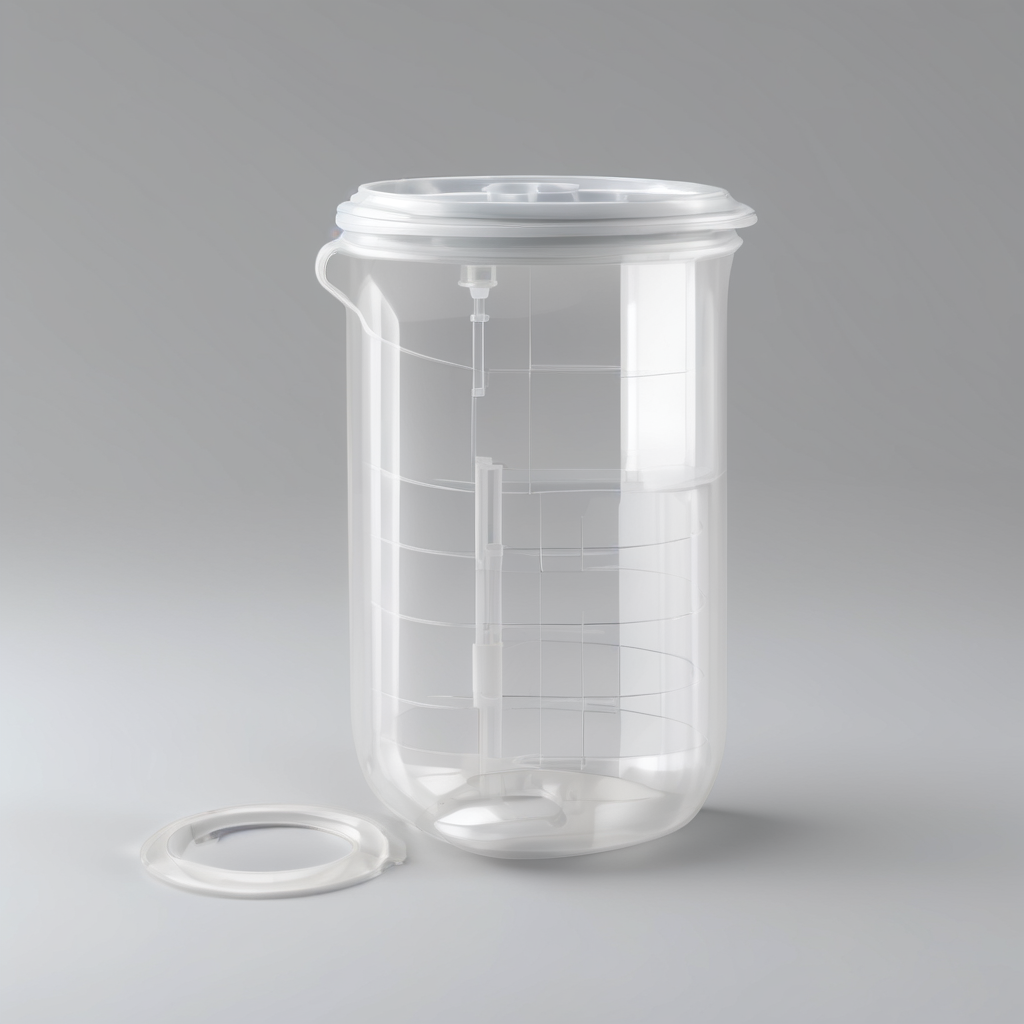
Visually and tactilely, urethane cast parts are virtually indistinguishable from injection-molded production parts.
Urethane casting excels at handling complex undercuts without the high cost of mechanical sliders or lifters required in injection molds.
Because urethane utilizes thermoset resins rather than true thermoplastics, it may not perfectly replicate material performance in extreme thermal or chemical stress tests.
The optimal deployment of vacuum casting is sequential: use it to freeze your design and validate the market before committing to injection molding capital expenditures.
Understanding the fundamental difference between manufacturing processes helps you choose the right path for your project. The industry broadly divides these methods into soft tooling and hard tooling. Each approach relies on distinctly different physical and chemical mechanisms.
Soft tooling relies on low-pressure environments. Technicians pour liquid polyurethane into flexible silicone molds, usually under a vacuum to eliminate trapped air bubbles. Gravity feeds the material into the cavity. Conversely, hard tooling uses high-pressure injection machinery. Industrial presses force molten plastic into rigid steel or aluminum molds. The soft approach focuses on finesse and chemical curing. The hard approach leverages brute mechanical force and rapid thermal cooling.
You must understand the distinct polymer chemistries at play. Urethane materials are thermosetting polymers. When technicians mix the two-part liquid resin, a permanent chemical cross-linking occurs during the curing phase. You cannot reverse this reaction. Once a thermoset part solidifies, it stays solid permanently.
Injection molding uses thermoplastics. These materials melt under high heat and solidify as they cool. You can technically remelt and recycle thermoplastic scrap. Because they undergo different chemical journeys, a thermoset prototype will never perfectly mimic the internal molecular structure of a final thermoplastic production part.
Material choices dictate the lifespan of the tool itself. Silicone acts as an excellent, highly detailed mold material. However, it suffers from chemical and thermal degradation. The exothermic heat generated by curing urethane breaks down the silicone over time. A standard silicone mold typically degrades after 15 to 25 shots.
Hard tooling operates on a completely different scale. Machined steel molds withstand immense clamping forces and thermal cycling. They easily scale to hundreds of thousands of cycles. Aluminum molds offer a middle ground, often lasting for tens of thousands of shots before requiring maintenance.
Engineers often assume soft tooling produces inherently inferior parts. This represents a common misunderstanding. In several critical areas, soft tooling either matches or outright beats high-volume hard tooling.
Liquid silicone possesses extraordinary flow properties. It captures micron-level details from the original master pattern. If your 3D-printed or CNC-machined master pattern has a flawless mirror finish, the silicone mold replicates it perfectly.
This fidelity translates directly to the final cast parts. They support exact Pantone or RAL color matching directly within the liquid resin. You do not need to paint them afterward. Key aesthetic capabilities include:
Custom Textures: From heavy matte finishes to subtle bead-blast approximations.
Glossy Finishes: Mirror-like surfaces for optical lenses or premium consumer electronics.
Tactile Sensations: Specialized resins can simulate rubbery, grippy, or even leather-like feels directly out of the mold.
Complex geometries routinely cause headaches in hard tooling. Features like snap fits, internal threads, or severe undercuts trap the part inside a rigid steel mold. To extract the part, engineers must design expensive mechanical lifters, side-actions, or sliders. These mechanisms add massive upfront costs.
Soft tooling offers a distinct flexibility advantage. Because the silicone mold remains pliable, technicians simply flex and peel the mold away from the cured part. Severe undercuts release naturally. You bypass the need for expensive mechanical sliders entirely. This makes soft tooling ideal for highly complex, consolidated part designs.
Many hardware products require threaded brass inserts for assembly. In high-speed injection molding, placing these inserts manually slows down the cycle time. It often requires expensive robotic automation or risky manual loading near hot presses.
Soft tooling handles embedded hardware effortlessly. Technicians manually place threaded inserts onto locating pins inside the open silicone mold before pouring the resin. The liquid urethane flows around the brass knurling, creating an exceptionally strong mechanical bond. You can also perform overmolding—casting a soft rubber-like urethane over a rigid substrate—with minimal setup costs.
While aesthetically superior in low volumes, soft tooling carries specific engineering limitations. You must account for these drifts in quality and precision during your design phase. Ignoring them leads to failed prototypes and wasted budgets.
You must set clear expectations regarding dimensional accuracy. Soft tooling cannot match the rigid predictability of machined steel. Standard casting tolerances generally sit at ±0.015 inches for the first inch. As the part grows, you must account for a standard +0.15% thermal shrinkage rate.
Precision injection molding routinely holds tighter tolerances, often reaching ±0.005 inches or better. The pliable nature of silicone means heavy parts might slightly deform the mold cavity under their own weight during the pour. You should only specify tight tolerances on critical mating surfaces, leaving non-critical areas more generous.
Design for Manufacturing (DFM) rules apply strictly to urethane processes. The chemical curing process generates heat, which causes uneven shrinkage if material distribution varies wildly. To prevent warping, follow these actionable engineering constraints:
Uniform Wall Thickness: Maintain a minimum wall thickness of 0.040 inches (1mm). Keep this thickness consistent across the entire geometry.
Strict Rib Ratios: When designing structural ribs, the height-to-width ratio should not exceed 3:1. Taller ribs trap heat and cause sink marks on the cosmetic face.
Generous Fillets: Apply internal radiuses to all sharp corners. Sharp corners concentrate stress and make mold release difficult.
Thermoset resins behave differently than production thermoplastics. Engineers must understand this reality before conducting extreme environmental tests. A thermoset prototype might exhibit a significantly different Heat Deflection Temperature (HDT) compared to the final ABS or Polycarbonate part.
Their thermal expansion coefficients also differ. If you test a cast prototype in extreme cold or high-heat environments (like an automotive engine bay), it might crack or warp prematurely. These prototypes work perfectly for form, fit, and general function. However, they remain unsuitable for specific extreme-environment validation tests meant for actual thermoplastics.
Choosing between these two processes ultimately comes down to basic project economics. You must balance your initial capital expenditure against your expected production volumes.
Silicone molds require virtually zero upfront tooling capital. A few gallons of liquid silicone cost very little compared to a block of P20 tool steel. However, soft tooling demands intensive manual labor. Technicians must manually mix, pour, demold, and trim every single unit. This drives the per-part cost relatively high.
Hard tooling flips this equation. You face massive upfront CapEx to machine the metal mold. Once completed, the automated machinery takes over. The press injects plastic every thirty seconds. Your unit cost drops to mere pennies.
We can map this economic reality using a straightforward decision matrix. The following table illustrates the general breakeven points for hardware projects.
Manufacturing Metric | Urethane Casting | Injection Molding |
|---|---|---|
Optimal Volume | 1 to 100 units | 1,000 to 100,000+ units |
Upfront Tooling Cost | Very Low ($) | Extremely High ($$$$) |
Per-Part Labor Cost | High (Manual demolding) | Very Low (Automated) |
Design Agility | High (Easy to remake silicone molds) | Low (Steel is hard to modify) |
Speed often dictates hardware success. Soft tooling offers unmatched agility. You can typically receive your first batch of cast prototypes within 2 to 4 weeks. This rapid turnaround allows you to keep testing and iterating. Machining metal molds takes significantly longer. You should expect lead times of 4 to 8 weeks, sometimes stretching into months for complex, multi-cavity tools. If your investors demand physical units quickly, soft tooling provides the only viable timeline.
Hardware developers frequently make a critical mistake. They treat soft and hard tooling as competing options. They ask, "Which one should I use?" Instead, you should view them as a sequential product development pipeline. They complement each other perfectly when used in the correct order.
Treat soft tooling as your ultimate risk mitigation strategy. It allows you to fail cheaply and iterate quickly. Once you solve all your mechanical and ergonomic problems, you can confidently write the check for a steel mold. This pipeline strategy prevents catastrophic late-stage engineering changes.
During the early stages, your design remains fluid. You need high-fidelity units to prove your concept without bankrupting your budget.
Investor Presentations: Use cast prototypes to hand investors a product that looks and feels like a mass-produced item. They cannot tell the difference.
Focus Groups: Put realistic units into the hands of target users. Gather feedback on ergonomics, weight, and aesthetics.
Final Assembly Verification: Test how your custom PCB, wiring harnesses, and off-the-shelf components fit inside the enclosure before committing to steel.
Once you gather feedback and update your CAD files, you lock the design. Engineers call this the "design freeze." You transition seamlessly to injection molding for scalable volume. To ease the financial transition, you can utilize modular Master Unit Die (MUD) inserts. MUD inserts allow you to machine only the core cavity details while using a standardized mold base. This hybrid approach lowers initial hard tooling costs while delivering scalable thermoplastic production.
Urethane casting absolutely matches injection molding in visual quality and complex geometry handling. It stands as the ultimate risk-mitigation tool for hardware developers. By utilizing soft tooling, you avoid the devastating financial consequences of premature hard tooling while still acquiring production-grade prototypes.
To move forward effectively, evaluate your current project status. First, determine your immediate volume needs. If you need fewer than 100 units, soft tooling is your optimal path. Second, review your strict tolerance requirements. Ensure your engineering team understands the ±0.015" variance. Finally, assess your budget to see if implementing a bridge-tooling phase will protect your long-term capital. Adopting this sequential pipeline guarantees a smoother, safer journey to mass manufacturing.
A: Large parts—up to 30 inches—are highly viable. Soft tooling isn't limited by the massive clamping force requirements of injection molding machines. You can cast large panels or thick enclosures easily. However, keep in mind that larger parts consume significantly more liquid resin, which will increase your per-part material costs.
A: Draft angles are not strictly mandatory due to the silicone mold's inherent flexibility. Technicians can stretch the mold to release straight walls. However, adding a standard 3 to 5-degree draft significantly reduces mechanical strain during demolding. This best practice extends your tool life and ensures better surface finishes.
A: Yes, absolutely. Urethane parts excel as end-use components for highly customized, low-volume, or specialty markets. Examples include medical device enclosures, specialized robotics, or bespoke automotive trims. If scaling to tens of thousands of units will never be financially viable for your specific niche, soft tooling serves as a permanent production solution.


